
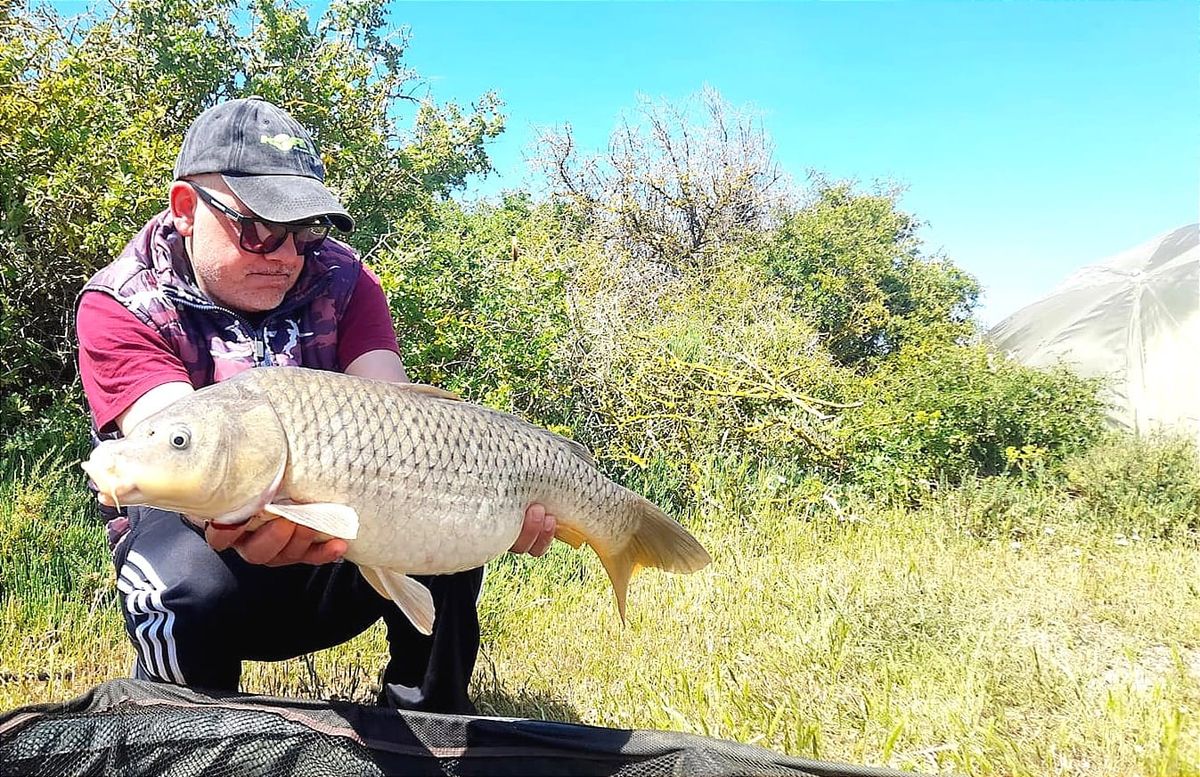
Ogni pescatore ha un suo amo preferito, quello che gli ha regalato il pesce più bello o che non lo delude mai. In questo articolo vediamo come scegliere l’amo in base allo spot o al tipo di paratura.
foto in alto: l’autore con une bella carpa regina, pescata in un canale vicino a Cagliari.
L’amo è l'anello di congiunzione tra noi e il pesce che stiamo cercando di catturare. Per prima cosa assicuriamoci che la sua punta sia sempre in ottime condizioni. Sembra banale e superfluo ricordarlo ma è meglio controllare la punta ogni volta che questa esce dall'acqua. Troppo spesso poi si scarica sull’amo la responsabilità di una cattura fallita. Se si slama un pesce durante un combattimento o peggio ancora se abbiamo una partenza e non abbiamo la classica auto-ferrata la colpa è sua. Non si ammette che il più delle volte è il pescatore ad aver sbagliato nella preparazione del rig. Se ad esempio, durante un recupero importante, l’amo si apre, ciò succede perché l’allamata non è avvenuta sul labbro inferiore del pesce, ma sui lati della bocca dove la punta, seppur affilata, trova le pareti che sono molto più dure. L'amo non ha ruotato in maniera corretta e ciò accade quasi sempre per poca mobilità del rig oppure dell'esca, dovuta al sovradimensionamento dei materiali usati rispetto alla grandezza dell'amo, rendendo limitato il movimento. Certe volte non basta semplicemente costruire un air-rig con un “nodo senza nodo” e pensare che questo funzioni perfettamente. Magari va aiutato con un line aligner o del termorestringente per far si che ruoti correttamente e riesca a far presa sul labbro inferiore della carpa. Ovviamente sono situazioni che possono accadere anche se facciamo le cose per bene, purtroppo non siamo padroni di quello che succede sott'acqua, ma comunque si possono limitare. Detto questo è importantissimo scegliere l'amo giusto da usare nel posto in cui peschiamo.
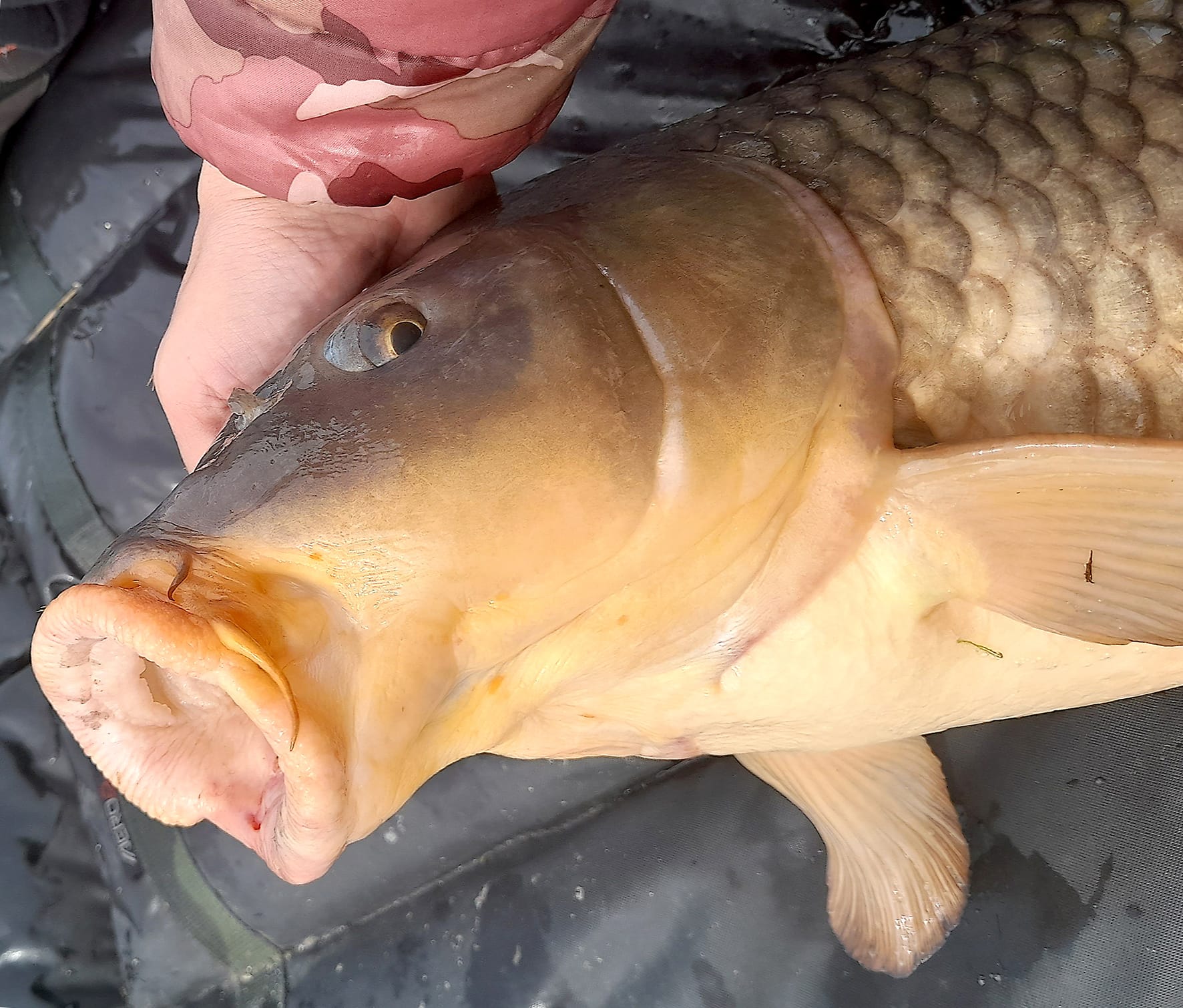
Un amo per ogni situazione - Quando scegliamo uno spot dobbiamo chiederci “che tipo di amo è più adatto qui?”. È sempre meglio reperire più informazioni possibili sul tipo di fondale e sulla mole dei pesci presenti. Queste informazioni ci possono aiutare a scegliere il tipo di amo; possiamo scegliere la punta in base al fondale e alla presenza di ostacoli che incideranno su un eventuale combattimento. Sapere su che tipo di fondale si adagia il nostro terminale è importantissimo, sopratutto se adoperiamo degli inneschi affondanti, dove l'amo poggia sul fondo. Un fondale con pietre o ghiaia e ricco di vegetazione, ci suggerisce un amo a punta curva, perché meno soggetto a spuntarsi proprio per via della curva che protegge l’estremità. Una volta in acqua l’amo è esposto al disturbo da parte di piccoli pesci o crostacei che lo fanno muovere di continuo, rischiando di spuntarlo su dei sassi o sporcandolo con detriti rendendolo non funzionale.
Quando ci troviamo su un fondale pulito, sabbioso o limaccioso, vanno bene anche gli ami a punta dritta. Tutto questo è valido con le boilies affondanti. Diversamente, se utilizziamo esche di tipo pop-up non abbiamo bisogno di accorgimenti particolari. Una caratteristica importante è la robustezza che deve essere massima quando sappiamo che potremmo fronteggiare esemplari molto grossi che ci costringono a forzare il recupero. Il mercato degli ami da carpfishing è molto vasto, molte marche offrono un’ampia scelta e sta a noi scegliere il prodotto che più ci soddisfa. La robustezza di un amo in genere è siglata con una X; quelli XX sono estremamente più robusti. I modelli “normali” vanno bene in situazioni dove non c’è il grosso rischio di incagli e luoghi sgombri da pericoli nascosti sotto la superficie. Questi ami ci danno la possibilità di stancare il pesce senza che trovi ostacoli dove nascondersi. Gli ami siglati con la X sono invece più robusti e vanno bene in tutte quelle situazioni dove c'è il pericolo di avere degli ostacoli sommersi e quindi abbiamo necessità di forzare il pesce durante il combattimento. Per finire abbiamo i super robusti, siglati XX, con uno spessore veramente grosso. Questo tipo di amo è veramente difficile da aprire e si utilizza in fiumi e grandi laghi dove dobbiamo necessariamente pescare vicino a ostacoli o legnaie per cercare di stanare le carpe più grosse e combattive.
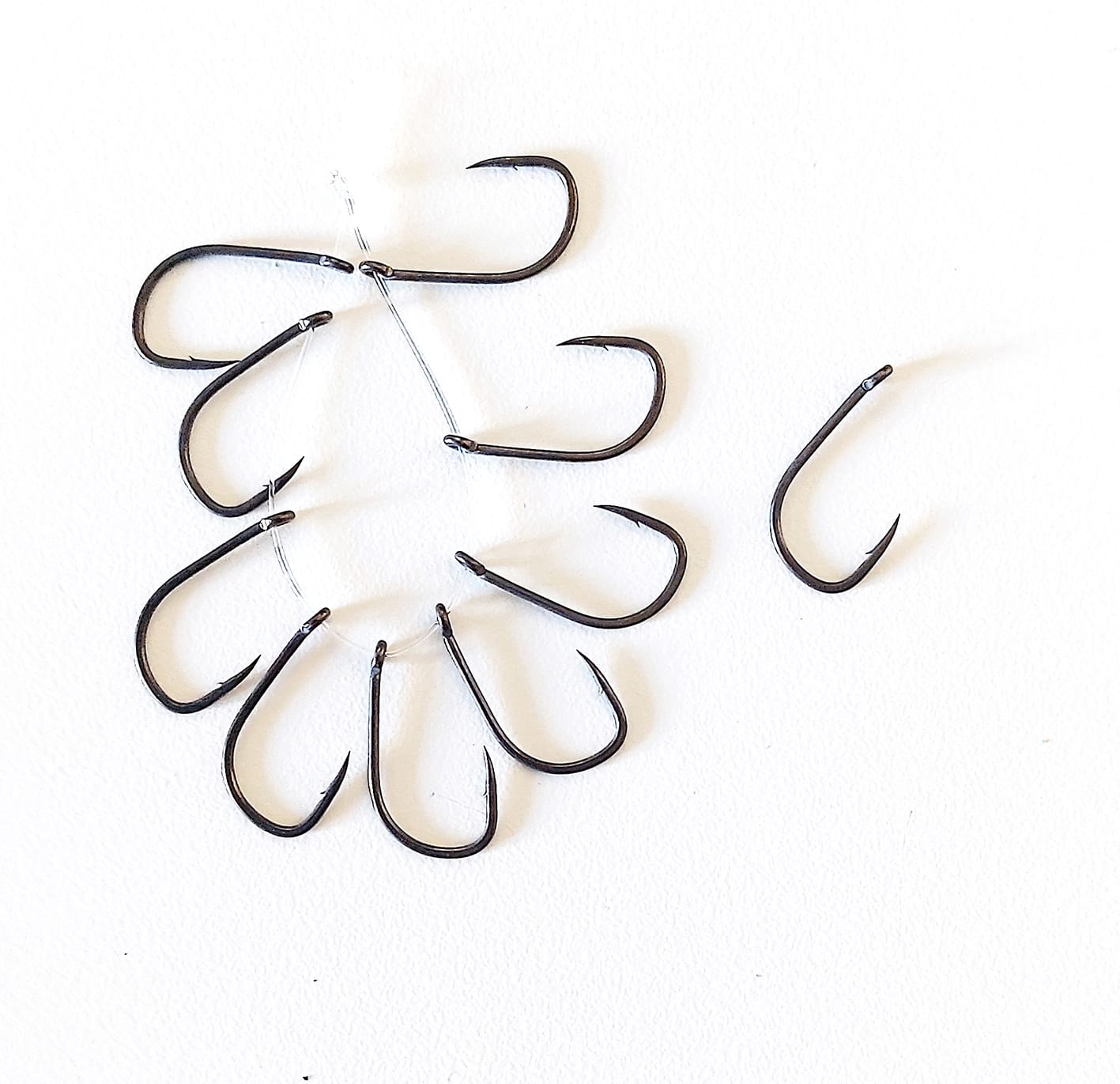
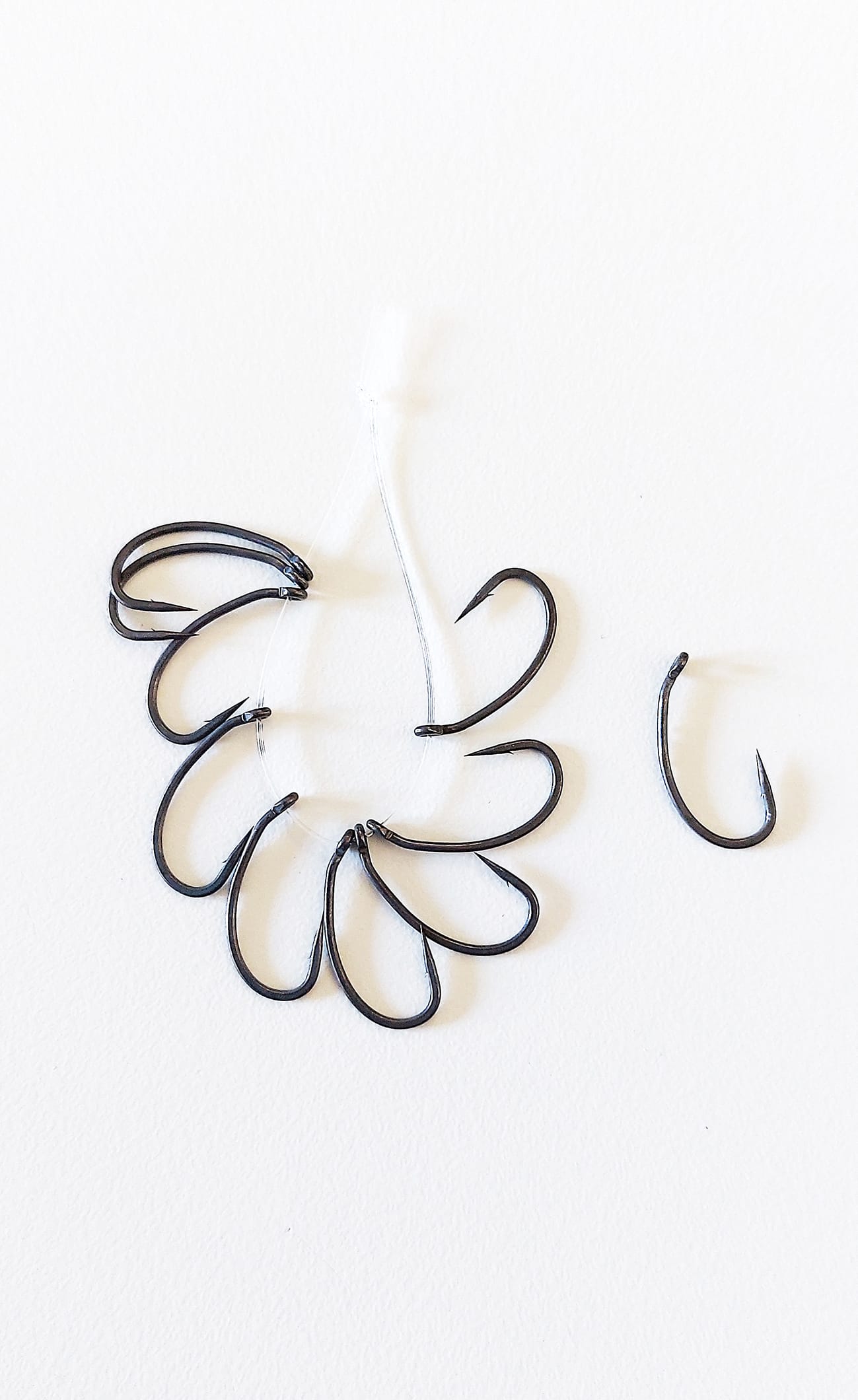
Ami wide gape e curve shank rivestiti in teflon per una migliore penetrazione, indispensabile per bucare bocche callose come quelle delle carpe di fiume.
Sempre affilati - Un amo deve necessariamente avere sempre la punta affilatissima. Possiamo avere il finale perfetto ma se l'amo è spuntato l’esca potrebbe non funzionare. Gli ami escono di fabbrica già ben affilati ma è sempre meglio sottoporli ad una affilatura. Esiste in commercio un kit di lime adatte a questo scopo e con un po' di pratica possiamo limare la punta rendendola più performante. Personalmente utilizzo gli ami così come la casa costruttrice li propone. Teniamo presente che comunque una punta più non rimane affilata per sempre e la durata dell’amo dipende da tanti fattori. Quindi è sempre meglio controllare la sua efficacia ad ogni cattura.
Quattro Ami Micidiali
Ogni tipo di amo ha una sua specifica forma e caratteristica che lo rende più adatta per uno scopo preciso. Ecco alcuni modelli molto usati nel carpfishing.
Il Wide Gape è un amo versatile con punta ricurva, gambo corto e occhiello rivolto verso l'interno. Si può usare in quasi tutte le presentazioni, sia pop-up che affondante. Perfetto per essere utilizzato con D-Rig e Blowback-Rig. È disponibile nelle versioni X e XX.
Il Curve Shank si presenta con punta dritta, estremamente affilata. Grazie all'occhiello angolato verso l'interno e alla sua forma curva, la carpa difficilemente riesce ad espellerlo. Si presta bene per costruire rig come Blowout-Rig e Spinner-Rig. Anch'esso è disponibile nelle versioni X e XX.
Il Long Shank ha il gambo lungo con punta dritta affilatissima e l'occhiello rivolto verso l'interno. La curvatura di quest'amo è molto stretta e questo lo rende meno idoneo a combattimenti gravosi. Può essere usato per tanti rig ma sicuramente offre il meglio su D-Rig, Blowback-Rig e Spinner-Rig.
Il modello Krank ha la punta ricurva, gambo corto e curva ampia. È maggiormente usato per la cattura di carpe erbivore, le amur. Va benissimo per la costruzione di semplici rig ma è più efficace con lo Spinner-Rig.
English version
The hook is the connecting link between us and the fish we are trying to catch. First of all, let us make sure its point is always in excellent condition. It may seem obvious and unnecessary to say it, but it is better to check the point every time it comes out of the water.
Too often the hook is blamed for a failed capture. If a fish comes unhooked during a fight, or worse, if we get a run and not the classic self-hooking, the hook is blamed. We do not admit that most of the time the angler has made a mistake in preparing the rig. If, for example, during an important retrieve the hook opens, this happens because the fish was not hooked in the lower lip but on the sides of the mouth, where the point, however sharp, finds much harder walls. The hook has not rotated correctly, and this almost always occurs because of poor mobility of the rig or bait, due to oversizing of the materials used in relation to the size of the hook, which limits movement.
Sometimes it is not enough simply to build a hair rig with a knotless knot and think that it will work perfectly. It may need help from a line aligner or shrink tubing so that it rotates correctly and can take hold in the carp's lower lip. Of course, these situations can happen even if we do things properly; unfortunately we are not masters of what happens underwater, but we can still limit them. Having said that, it is very important to choose the right hook for the place where we are fishing.
A hook for every situation - When we choose a spot, we must ask ourselves: what type of hook is most suitable here? It is always better to gather as much information as possible about the type of bottom and the size of the fish present. This information can help us choose the type of hook; we can choose the point according to the bottom and the presence of obstacles that will affect a possible fight. Knowing what type of bottom our leader rests on is very important, especially if we use sinking baits, where the hook lies on the bottom.
A bottom with stones or gravel and rich in vegetation suggests a hook with a curved point, because it is less likely to become blunt precisely because the curve protects the tip. Once in the water, the hook is exposed to disturbance by small fish or crustaceans that move it continuously, risking blunting it on stones or dirtying it with debris and making it ineffective. When we are on a clean, sandy or muddy bottom, hooks with a straight point are also fine. All this applies with sinking boilies. Differently, if we use pop-up baits we do not need special precautions.
An important feature is strength, which must be maximum when we know we may face very large specimens that force us to fight hard. The market for carp-fishing hooks is very broad; many brands offer a wide choice and it is up to us to choose the product that satisfies us most. Hook strength is generally marked with an X; those marked XX are extremely stronger. Normal models are fine in situations where there is no great risk of snagging and in places free of hidden dangers under the surface. These hooks give us the possibility of tiring the fish without it finding obstacles in which to hide.
Hooks marked X are stronger and are suitable for all situations where there is the danger of submerged obstacles and therefore we need to force the fish during the fight. Finally there are the super-strong hooks, marked XX, with a truly large thickness. This type of hook is very difficult to open and is used in rivers and large lakes where we must necessarily fish close to obstacles or submerged timber in order to try to draw out the largest and most combative carp.
Always sharp - A hook must necessarily always have a very sharp point. We may have the perfect leader, but if the hook is blunt the bait may not work. Hooks leave the factory already well sharpened, but it is always better to sharpen them. There are kits of files on the market suitable for this purpose, and with a little practice we can file the point and make it more effective. Personally, I use hooks as the manufacturer supplies them. Keep in mind, however, that a point does not stay sharp forever and the life of a hook depends on many factors. Therefore it is always better to check its effectiveness after every catch.
Four deadly hooks - Each type of hook has its own specific shape and characteristic that makes it more suitable for a precise purpose. Here are some models widely used in carp fishing.
The Wide Gape is a versatile hook with a curved point, short shank and eye turned inward. It can be used in almost all presentations, both pop-up and sinking. It is perfect for use with D-rigs and blowback rigs. It is available in X and XX versions.
The Curve Shank has a straight, extremely sharp point. Thanks to the eye angled inward and its curved shape, the carp finds it difficult to eject it. It lends itself well to building rigs such as the blowout rig and spinner rig. It too is available in X and XX versions.
The Long Shank has a long shank with a very sharp straight point and the eye turned inward. The bend of this hook is very narrow, and this makes it less suitable for heavy fights. It can be used for many rigs, but it certainly gives its best on D-rigs, blowback rigs and spinner rigs.
The Krank model has a curved point, short shank and wide bend. It is mostly used for catching grass carp, the amur. It is excellent for building simple rigs but is more effective with the spinner rig.
Commenti ()